Strategic SEO Audit: Diagnose Traffic Problems That Matter
The Score Problem
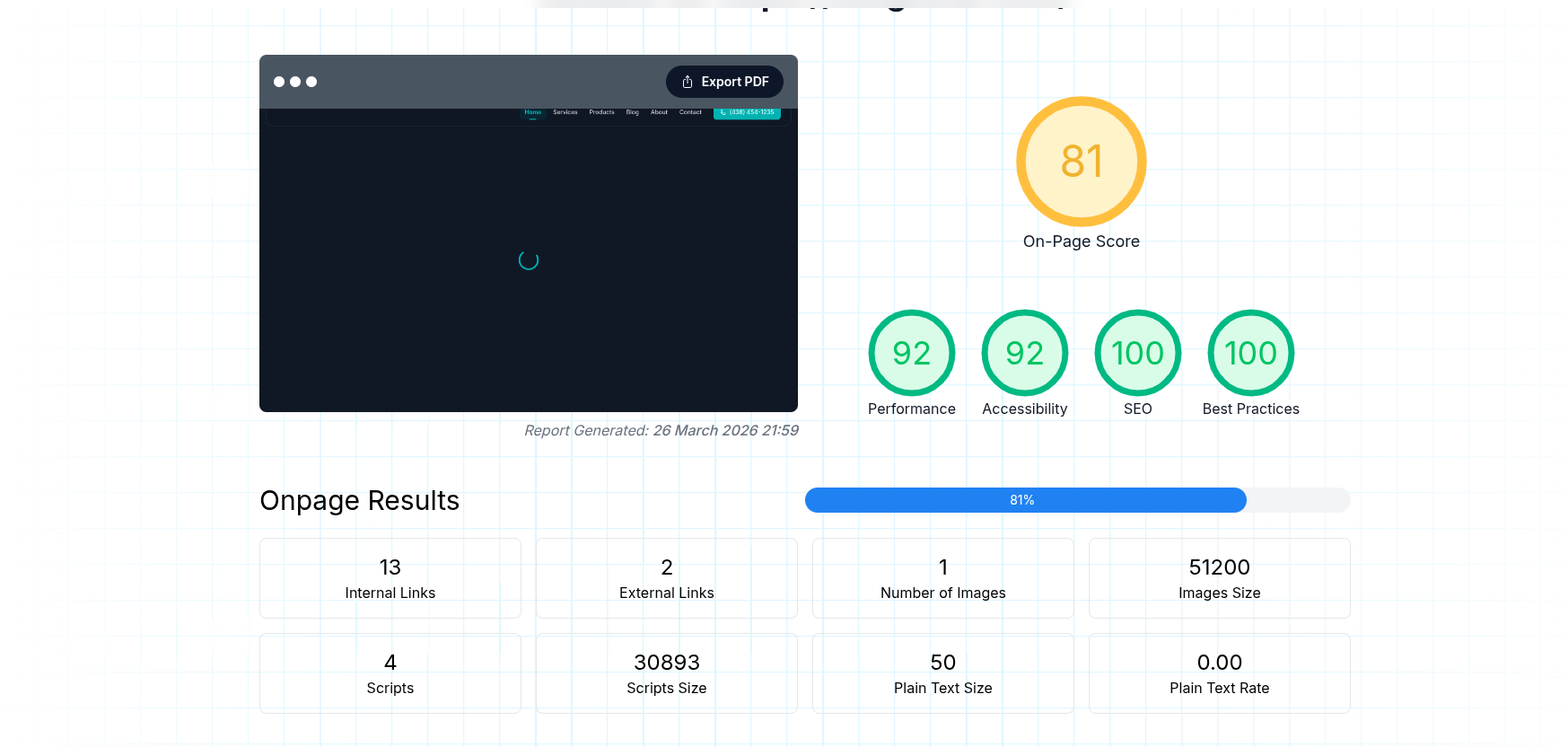
A site scoring 95/100 can get zero organic traffic. A site scoring 60/100 can dominate its niche. I've seen both.
SEO scores measure compliance with a checklist — whether you have alt text, whether your title tags are under 60 characters, whether your page loads in under 3 seconds. These things matter, but they don't tell you what to actually do next. A score of 73 doesn't tell you whether to fix your page speed, rewrite your content, or go after different keywords.
When I was building DadSEO, I wanted the opposite: an audit that tells you exactly what matters and in what order.
Score-Based vs Strategic: What's the Difference?
| Aspect | Score-Based Audit | Strategic Audit |
|---|---|---|
| Output | Single number (e.g., "73/100") + checklist of issues | Diagnosis + prioritized action plan |
| Focus | Technical compliance | Business impact |
| Prioritization | All issues treated equally | Ranked by Impact = Severity × Scale × Page Importance |
| Context | No understanding of what drives revenue | Uses GSC data to know which pages matter |
| Example Finding | "Missing alt text on 12 images (-5 points)" | "Your top 3 landing pages drive 78% of revenue. Two have declining CTR. Fix those pages first." |
| Next Step | Fix highest-point items to improve score | Address highest-impact findings to grow traffic |
| Time to Results | Months of busywork, unclear ROI | Weeks of focused work, measurable impact |
The key difference: A score-based audit tells you what's wrong. A strategic audit tells you what matters.
What a Strategic Audit Does Differently
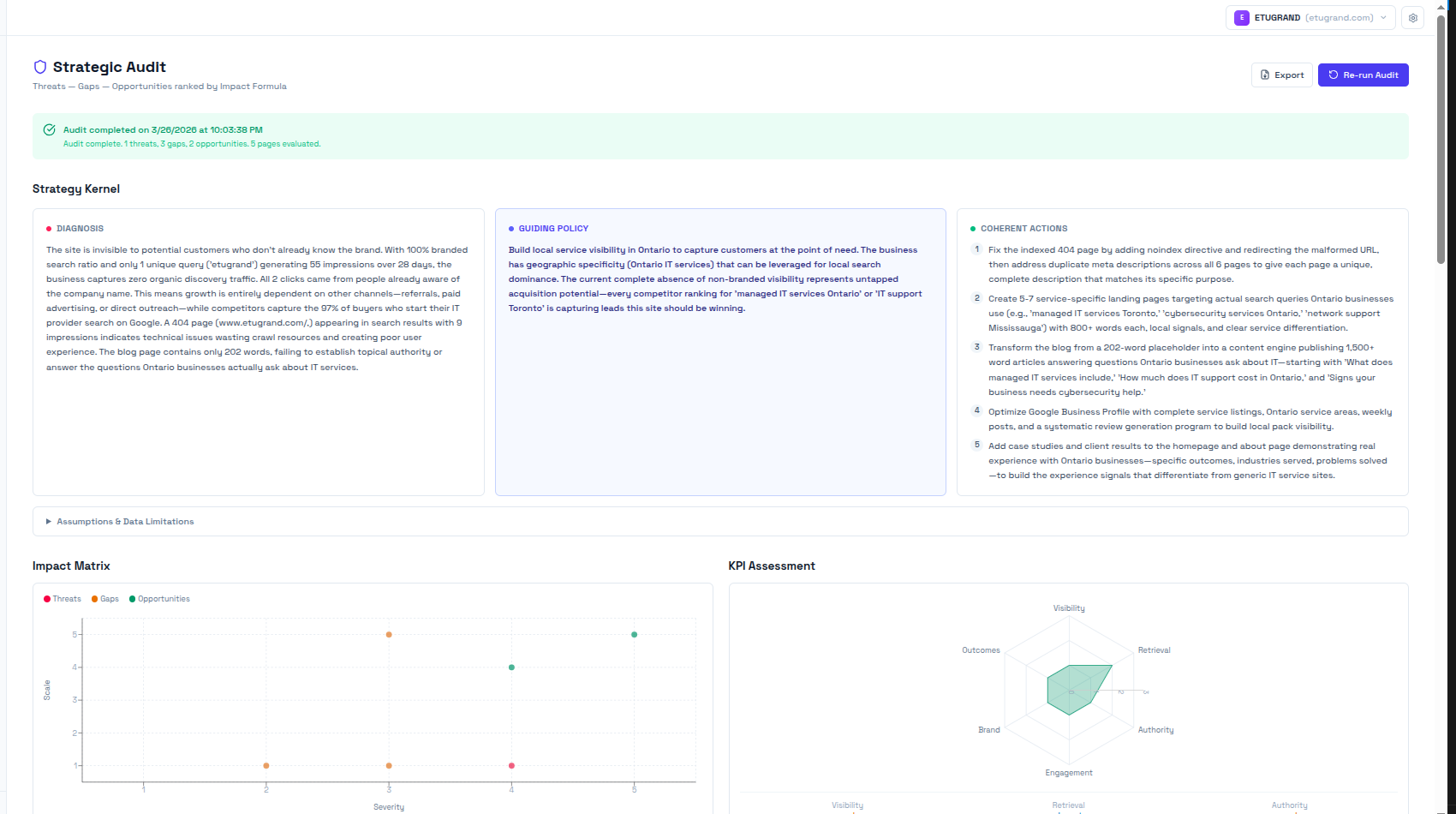
The foundation is Richard Rumelt's Strategy Kernel (read more about this in The Strategy Kernel Framework for SEO). Instead of counting issues, a strategic audit produces three things:
- A diagnosis — What's actually happening with your search performance and why
- A guiding policy — Where to focus, and what to ignore for now
- Prioritized actions — Specific steps, sequenced so each builds on the last
┌─────────────────┐     ┌───────────────────────┐     ┌────────────────────────┐
│  1. DIAGNOSIS   │ ──▶ │ 2. THREAT/GAP/OPP     │ ──▶ │ 3. IMPACT SCORING      │
│  (Real GSC Data)│     │    CLASSIFICATION     │     │ (Sev × Scale × Imp)    │
└─────────────────┘     └───────────────────────┘     └────────────────────────┘
                                                                   │
                                                                   ▼
┌─────────────────┐     ┌───────────────────────┐     ┌────────────────────────┐
│ 5. CONTINUOUS   │ ◀── │ 4. SEQUENCED ROADMAP  │ ◀───┘  COHERENT ACTIONS      │
│    MONITORING   │     │ (Blocker/Found/Boost) │        (No random tickets)   │
└─────────────────┘     └───────────────────────┘
Step-by-Step: How to Run a Strategic SEO Audit
Step 1: Ingest First-Party Search Performance Data
Never audit a website without its Google Search Console data. A crawler sees HTML files; Search Console reveals where real users, clicks, impressions, and revenue live.
- Isolate your Money Pages (URLs generating the majority of conversions or pipeline).
- Identify Striking Distance Queries (Positions 4–10 with high impressions).
- Identify Zombie Content (URLs indexed for >12 months generating <5 impressions per month).
Step 2: Classify Findings (Threats, Gaps, Opportunities)
Instead of an unsorted list of 200 bugs, categorize every finding into one of three strategic buckets:
- Threats (Blockers): Things actively destroying current equity:
- Core Web Vitals failing on primary landing pages
- Canonical issues causing Google to index the wrong version of a page
- A competitor suddenly outranking you for brand queries
- Gaps (Foundations): Structural weaknesses limiting growth:
- Missing content for high-intent queries your competitors rank for
- Weak internal linking between related pages
- Missing schema markup on pages that could win rich results
- Opportunities (Boosters): High-leverage growth you can capture quickly:
- Queries where you rank 4–8 with high impressions (small title/passage updates yield major click gains)
- Topic clusters with low competition that match your expertise
- Citation eligibility in AI search engines (ChatGPT, Perplexity, Gemini)
Step 3: Calculate the Impact Score
Not all findings are equal. DadSEO calculates a mathematical score for every finding:
$$\text{Impact Score} = \text{Severity } (1\text{–}5) \times \text{Scale } (1\text{–}5) \times \text{Page Importance } (1\text{–}3)$$
- Severity (1–5): Cosmetic issue (1) ➔ Blocks core indexing or functionality (5)
- Scale (1–5): One footnote page (1) ➔ Site-wide template (5)
- Page Importance (1–3): Footnote/Terms page (1) ➔ Primary conversion page (3)
Example: Missing H1 on Terms page = $1 \times 1 \times 1 = \mathbf{1}$. Broken canonical on core product templates = $5 \times 4 \times 3 = \mathbf{60}$. Now your team knows exactly what to fix first.
Downloadable Strategic SEO Audit Checklist
Use this structured markdown checklist to run a strategic audit on your property:
# Strategic SEO Audit Execution Checklist

## Phase 1: Real-Data Baseline & Diagnosis
- [ ] Connect Google Search Console (minimum 12–16 months of historical data).
- [ ] Map top 10 conversion/revenue URLs and verify zero indexing errors.
- [ ] Filter GSC for queries in Positions 4–10 with >500 impressions/month.
- [ ] Verify homepage entity and brand signals.

## Phase 2: Threat & Blocker Elimination (P0)
- [ ] Check canonical tags across all page templates for self-referencing accuracy.
- [ ] Audit robots.txt and HTTP response headers for accidental `noindex` directives.
- [ ] Inspect Core Web Vitals (LCP, INP, CLS) on top 20 traffic-generating pages.
- [ ] Identify and resolve keyword cannibalization across duplicate intent URLs.

## Phase 3: Structural Foundations & Semantic Gaps (P1)
- [ ] Map content architecture against Jobs-to-Be-Done (JTBD) customer journey stages.
- [ ] Validate schema markup (`JSON-LD`) for entity consistency and rich result eligibility.
- [ ] Build internal link pathways from high-authority hubs to underperforming money pages.
- [ ] Review AI engine visibility (`llms.txt`, crawler bot access for GPTBot, PerplexityBot).

## Phase 4: Prioritization & Impact Calculation
- [ ] Score all audit findings using: Severity (1-5) × Scale (1-5) × Page Importance (1-3).
- [ ] Sequence actions into Blockers (Sprint 1), Foundations (Sprint 2), Boosters (Sprint 3).
The Full Audit Stack
DadSEO runs a comprehensive strategic assessment across multiple dimensions:
- Technical SEO — Crawlability, indexability, Core Web Vitals, security headers, schema markup
- Content Portfolio Audit — Keep/Improve/Consolidate/Remove decisions for every indexed page
- Image Optimization — Alt text, sizing, format, lazy loading on actual traffic pages
- Schema Markup — Verification of JSON-LD structures and entity disambiguation
- AI Visibility (GEO) — How AI search engines (ChatGPT, Perplexity, Gemini) see and cite your brand
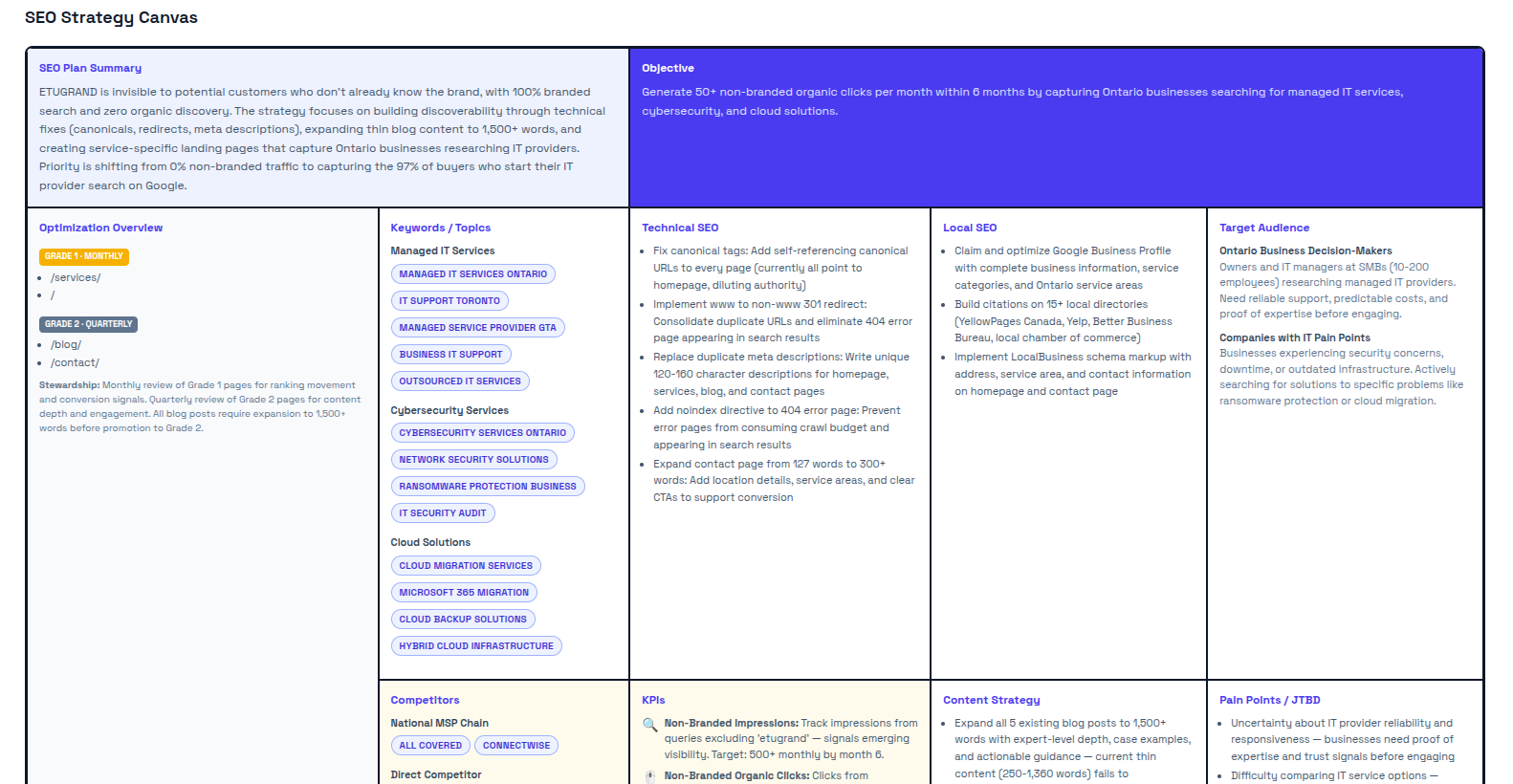
- Strategy Canvas — A one-page visual roadmap tying diagnosis to coherent actions
Frequently Asked Questions
What makes a strategic SEO audit different from an automated audit?
Automated tools count syntax errors and generate an arbitrary score out of 100. A strategic SEO audit focuses on business impact: it uses real Search Console data to diagnose why you are losing clicks and provides a prioritized roadmap based on revenue leverage.
How often should a site undergo a strategic audit?
A comprehensive strategic diagnostic should be run quarterly, or immediately following major Google Core Updates, site migrations, or sudden traffic drops.
How do I start?
Every audit starts by connecting your Google Search Console. DadSEO pulls up to 16 months of search data — queries, clicks, impressions, and average positions — before running the diagnostic.
Founder of DadSEO. I build tools that turn SEO data into strategy — not scores. Previously spent years running audits that told me what was broken without telling me what mattered.
Read more about me →Ready to see what your SEO data actually means?
DadSEO connects to Google Search Console and gives you a strategic diagnosis — threats, gaps, and opportunities ranked by impact.
Get Your Free Audit